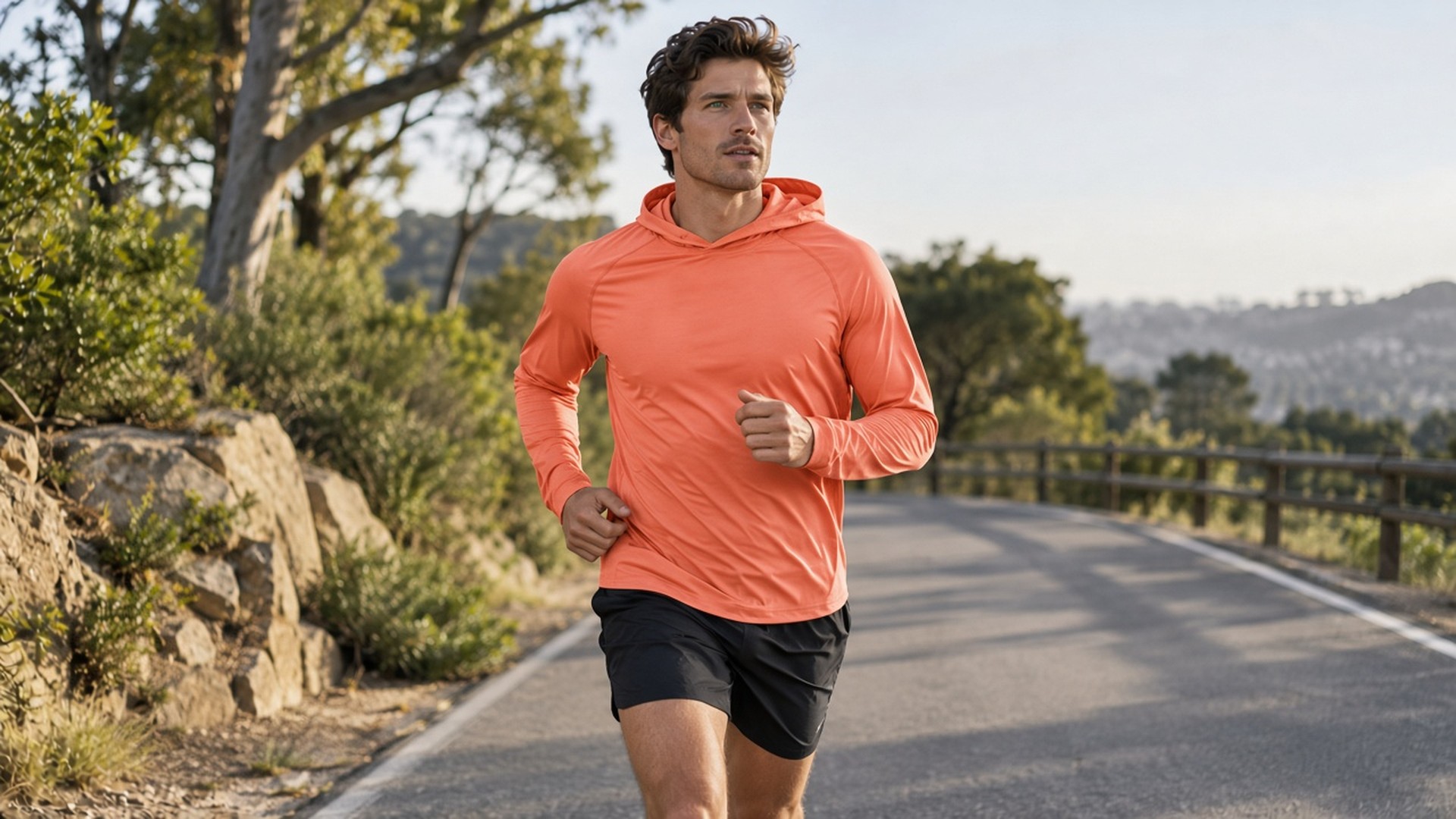
Yes, you can run in a hoodie if it suits the conditions and stays comfortable as you warm up and sweat. On a cool day, a suitable hoodie may work for an easy run. If it traps too much heat, becomes cumbersome when wet, or distracts you during movement, that design may be better suited to dry post-run wear.
Here, “hoodie” means a hooded sweatshirt or training top. Running rain jackets are outside this discussion.
For running brands and clubs, the distinction matters before sampling begins. Customers may want a top to wear throughout a run, a layer for waiting at the start, or a dry change for afterward. Those uses give the garment different jobs.
When Does a Hoodie Work During a Run?
Easy Runs in Cool Conditions
A chilly start is one reason people run in hoodies. The extra coverage feels welcome on the walk to the meeting point or during the first easy stretch. Some runners also prefer a hooded top for its familiar feel.
Once the runner settles into a pace, the garment needs to remain comfortable. Arm swing should feel natural, and the body and sleeves should stay manageable as warmth and moisture build.
Standing outside gives you one impression of the weather. Running in the same clothes can give you another.
A hoodie that feels right before starting may need adjusting later. A zip opening, where present, can offer some flexibility; removing the layer may be more appropriate as conditions change. Neither option makes every hoodie suitable for a whole run.
Easy effort is only part of the decision. A relaxed outing can still produce plenty of sweat, especially when it lasts longer or the weather changes. For a brand approving a sample, the useful observation is how the garment behaves through the intended outing, beyond the initial dry fitting.
Sessions with Sustained Sweating
Intervals, tempo sessions, and longer outings put more demands on the top. Heat builds, moisture accumulates, and details that seemed harmless at the start can become distracting.
Sweat evaporation helps release body heat during exercise. Air movement and environmental conditions affect that process, which is why coverage that feels comfortable at rest can feel too enclosed during training. CDC guidance on heat and exercise explains the role of evaporation in cooling.
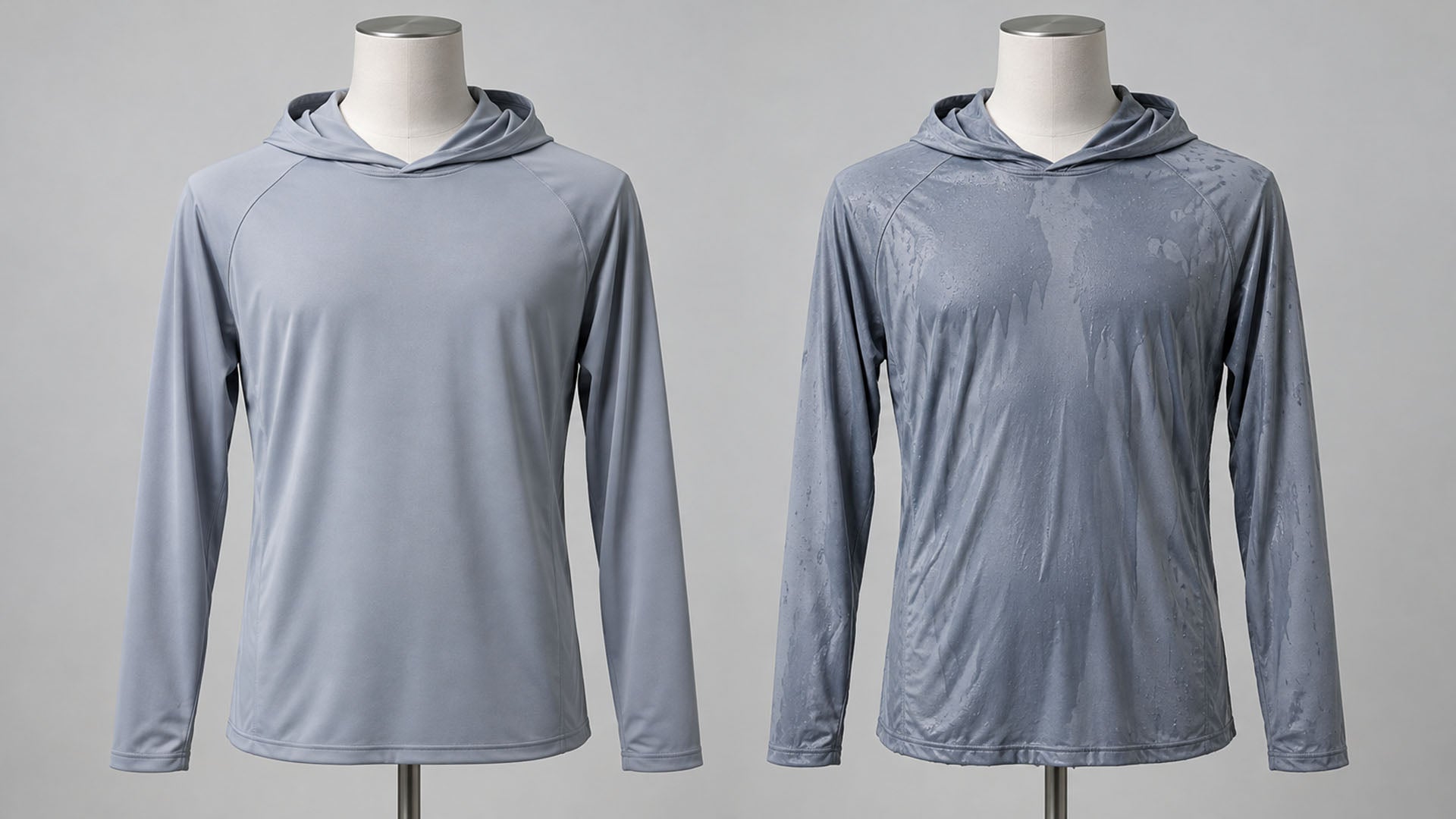
Moisture can also change how the hoodie moves.
Depending on how much water it retains, the garment may feel heavier, cling to the torso, or pull through the sleeves. A damp hood may tug at the neckline or become more noticeable with each stride. These are observations to check in the actual sample; a “performance” label does not establish how it will behave.
Look for repeated adjustments. Does the wearer keep pulling the body away from their skin? Does the neckline become bothersome as the hood gets wet? Are the sleeves still comfortable during arm swing?
The answers help determine whether the garment supports the planned session.
Summer adds another constraint. There is no universal temperature cutoff for every hoodie and runner. Humidity, sun exposure, effort, and coverage all affect the judgment. A thick sweatshirt and a lightweight hooded training top can behave differently, but “lightweight” alone does not guarantee comfort in hot conditions.
If the extra coverage becomes increasingly hot or cumbersome, reconsider wearing it during that session. It may have a more useful role before the start or as a dry change afterward.
If your range also needs a tee for hot-weather sessions, see our guide to summer running shirts.
When Is a Hoodie Better for Post-Run Wear?

After finishing, the runner may still have a walk home, a train journey, or coffee with the club ahead.
A dry hoodie can provide comfortable coverage during that part of the day. Room to layer over a fresh shirt, an easy fit, and a pleasant feel may matter more than keeping the garment unobtrusive through continuous running.
That is a clear role for a running brand’s post-run hoodie, including within a run club apparel range.
Changing into a dry top should be part of the discussion. A hoodie kept in a bag for afterward offers a different experience from the garment that became soaked during the run. In cool conditions, changing damp clothing helps the wearer stay dry.
Consider a hypothetical sample that feels comfortable while waiting for a club run. Once the hood becomes damp, however, it starts pulling at the neck. If that behavior persists during sample assessment, the brand might position the design primarily for pre- and post-run use, with a description that explains this limitation.
Product descriptions and photography should reflect the intended routine. If customers are expected to put the hoodie on after changing, show that moment. “Post-run comfort” describes a benefit buyers can assess through fit, coverage, and feel; the name “recovery hoodie” does not establish faster physical recovery.
Some designs may also suit easy runs. Secondary uses can be described with the conditions under which they have been assessed.
How Should Brands Define the Hoodie’s Main Use?
A product brief becomes more useful when it names the wearing moment.
“Training and lifestyle” leaves room for interpretation. A clearer brief might specify a hoodie for continuous easy running in cool conditions, or a dry layer for club members to wear after finishing.
The distinction guides both sample assessment and the eventual product description.
| Decision | Mainly for running | Mainly for post-run wear |
|---|---|---|
| Primary wearing moment | During continuous running | After finishing or changing |
| What to observe | Comfort as the wearer warms up and sweats | Comfort while standing, walking, or sitting after changing |
| Movement check | Repeated pulling, hood distraction, or restricted arm swing | Ease of layering and everyday movement |
| Description should explain | Intended running use and its conditions | The post-run routine and coverage it supports |
A single style can cover both uses, provided each has been assessed. The table helps identify the primary role; it does not divide every hoodie into a fixed category.
Keep the approval notes focused on five points:
- Name the main use. Record whether the hoodie is intended for continuous running, waiting before the start, or wearing afterward.
- Define the wearer and conditions. Include the target customer, expected weather, and planned effort.
- Record adjustments during running. Note repeated neckline changes, pulling at the body, or interference with arm swing.
- Record changes after sweating. Describe added weight, cling, sleeve drag, or hood movement in plain language.
- Match the claim to the findings. Keep the product description within the uses the sample assessment supports.
A design that works well after running can be a useful addition to the range. A style that stays comfortable during the intended training session supports a different product promise. Clear positioning helps customers understand when to reach for each.
To discuss a custom running hoodie with JN Sports, share the intended wearing moment, expected conditions, and a reference garment. Those details provide a useful starting point for deciding what the sample needs to demonstrate.